
How LASIK works
Two lasers do the work. The first opens a thin flap in the surface of the cornea. The surgeon folds it back, and the second laser reshapes the tissue underneath so light focuses where it should. The flap is laid back down and seals without stitches. Numbing drops are used, you are awake, and the laser itself runs for seconds to a couple of minutes per eye.
Plan on two to three hours at the clinic on the day for checks, the treatment and a short rest. Both eyes are often done on the same day; some clinics do one eye at a time.
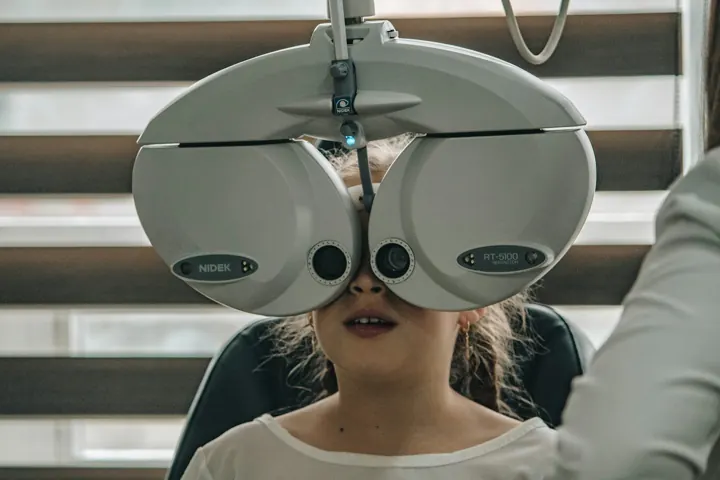
Who LASIK suits
Adults with an everyday prescription that has stayed the same for at least a year, healthy eyes and a cornea thick enough to make the flap and still leave plenty of tissue. It treats short sight, long sight and astigmatism. The scans at your assessment measure the cornea, and that measurement decides more than the number on your glasses.
Who should look at something else
- Anyone under 18. Laser eye treatment is for adults, and most clinics want you a little older, once the prescription has settled.
- Anyone whose prescription changed in the last year. Wait until it has held steady.
- Pregnancy and breastfeeding, when hormones can change the prescription. Wait until things have settled.
- Keratoconus, or a cornea the scans show is too thin or irregular for laser.
- Uncontrolled diabetes, or an autoimmune condition or medicine that affects healing, without extra assessment first.
- Contact sports with regular blows to the face, such as boxing or martial arts. A flap can be knocked; LASEK, PRK or SMILE leave no flap.
- Dry eyes that are already a problem. LASIK cuts nerves in the cornea that help keep the eye wet.
Recovery
Most people notice clearer sight straight away and are back to normal within a day or two. Expect watery, gritty eyes for the first hours and a protective shield at night for about a week. You need someone to drive you home. Driving again is usually possible after 24 to 48 hours, once the clinic confirms your sight meets the driving standard.
As a general guide after LASIK: no exercise for a week, no swimming for two weeks and no contact sport for four. Your own surgeon's instructions come first.
The risks, honestly
Most people have some side effects that fade over a few months: glare, halos and starbursts around lights at night, gritty or dry-feeling eyes and red marks on the white of the eye. About 1 in 10 people need a second treatment to fine-tune the result. Less often the eye is under- or over-corrected, or dry eye lasts. Flap problems and serious loss of sight are rare.
No laser can make you see better than you already see with your glasses on. It can only take the glasses away. Results are less predictable for very large prescriptions, and reading glasses still arrive in your forties, as they do for everyone.
What it costs
LASIK costs €1,500 to €2,600 per eye in Ireland, so €3,000 to €5,200 for both eyes. Custom (wavefront) treatment starts from €2,000 an eye. Laser eye surgery qualifies for tax relief at 20%. Compare it with the other treatments.
Choosing a surgeon
Ask for the surgeon's name and check it on the Medical Council's register. By law a doctor can only practise independently as a specialist with specialist registration, and an eye surgeon should be on the Specialist Division of the register in ophthalmology.
The Royal College of Ophthalmologists advises taking at least a week after the consultation with your surgeon before you decide, and checking that any deposit is refundable if you change your mind.
Questions people ask
Is LASIK painful?
Numbing drops mean you feel pressure, not pain, during the treatment. Afterwards the eyes are usually sore and watery for a few hours, then settle.
How long does LASIK last?
The reshaping is permanent. Your eyes can still change with age, and reading glasses usually arrive in your forties either way.
Can both eyes be done on the same day?
Often, yes. Some clinics prefer one eye at a time. Ask at the assessment which they do and why.
Is LASIK better than LASEK?
Neither is better in general. LASIK recovers faster; LASEK and PRK leave no flap, which suits thinner corneas and contact sports.